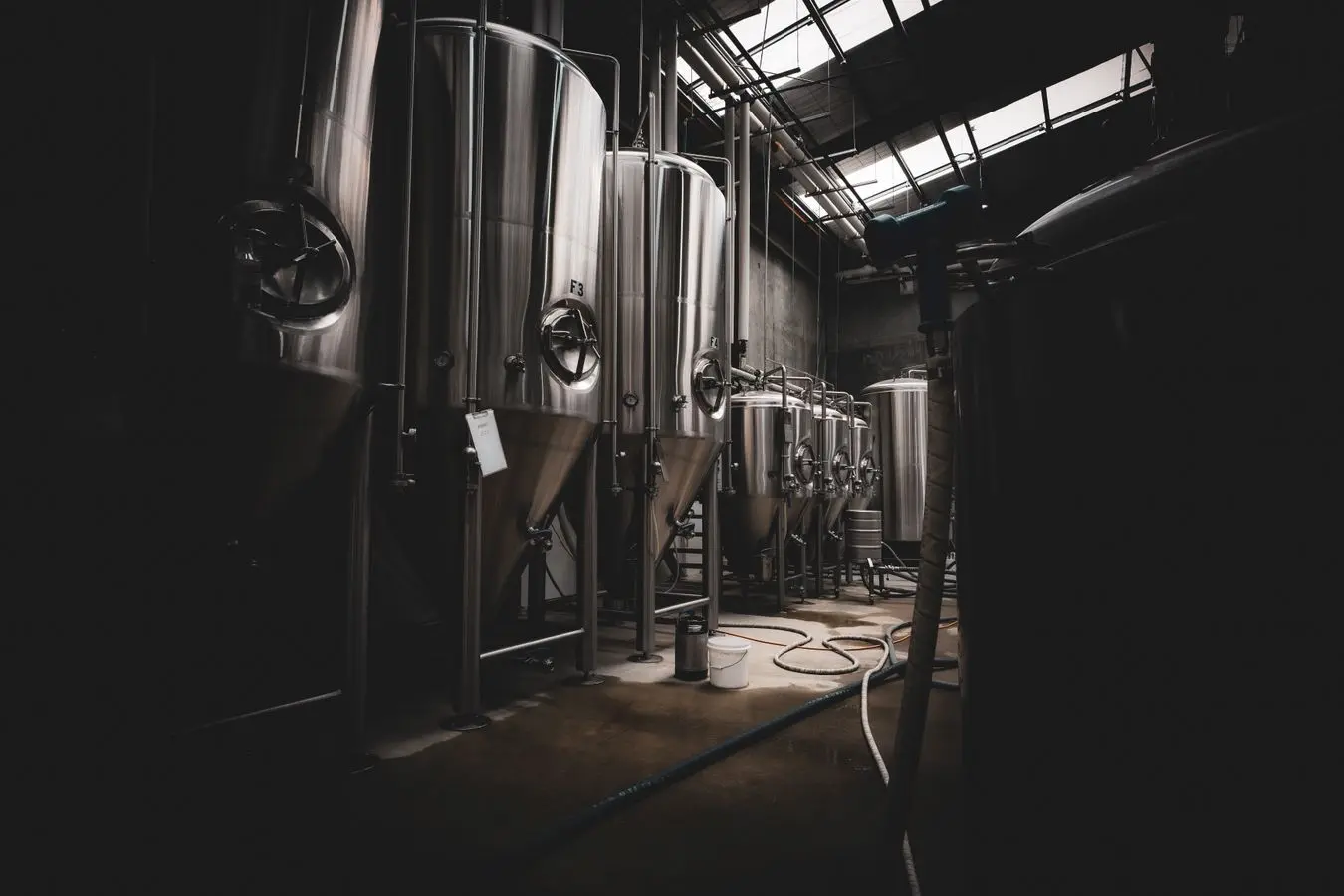
An attractive but seasonal pairing
Fermentation and cellar cooling can provide a source for cleaning water, preheating and space or process heat. Winery harvest periods create strong seasonal variation, so annual coincidence needs careful modelling.
Brewery opportunities
Breweries have refrigeration, hot-water demand and repeated cleaning cycles. Wort boiling remains a higher-temperature duty, but lower-temperature preparation and cleaning may be separated from the steam network.
Storage often belongs in the concept
A hot-water tank can absorb recovered heat during cooling operation and release it during cleaning. Tank temperature and volume should follow measured cycles rather than a generic rule.
Separate seasonal and daily coincidence
Fermentation and cellar cooling can overlap with vessel washing, packaging hot water and process preheating. In wineries the strongest cooling period may be concentrated around harvest, while space-heating demand occurs later. Annual totals should therefore be split by week and by production phase.
Breweries often offer more regular cleaning cycles, but wort boiling remains a different high-temperature duty. Map low-temperature preparation and cleaning separately from the steam system so a moderate-temperature heat pump is not judged against the hardest load on site.
Size storage from measured cycles
A buffer or hot-water tank can collect heat during fermentation cooling and release it during cleaning. Size it from the duration, temperature and volume of measured cycles. A generic litres-per-kilowatt rule can conceal both unusable low-temperature storage and insufficient recovery time.
The operating model should retain an independent rejection route when the tank is full and backup heat when cooling is unavailable. Raising refrigeration condensing pressure simply to make hotter water must be compared with efficient refrigeration plus a separate upgrading stage.
Sources
General technical explanation. No specific external source claims are made on this page.